

Council briefing: Idaho utilities, co-ops discuss economic forecasting, load growth & resource planning
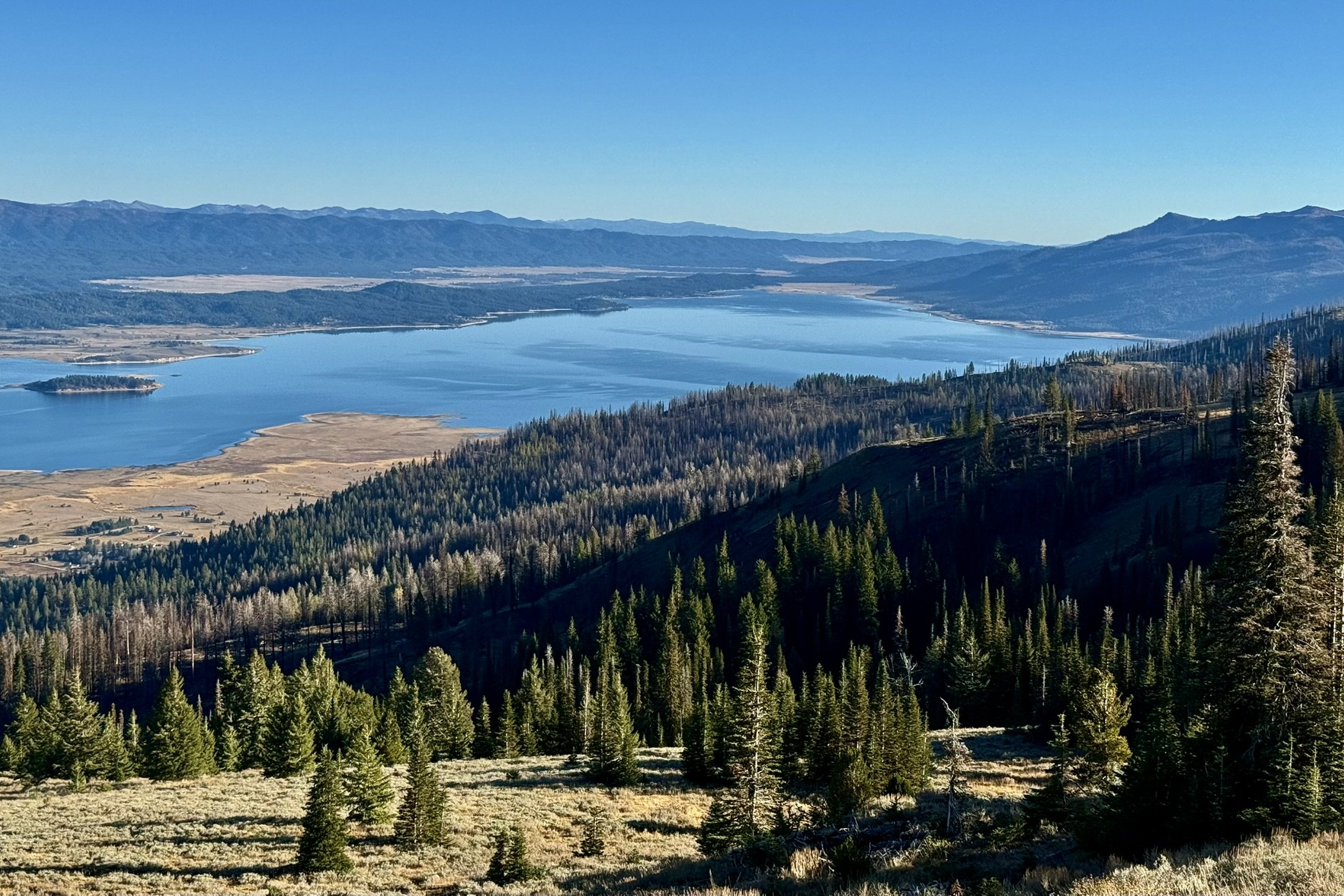
At October’s meeting in Donnelly, Idaho, the Council heard presentations about the state of the economy in the Pacific Northwest and nationally, as well as how utilities and electric co-operatives are planning resource development to meet growing demands for electricity in their service territories.
Presenters included Grant Forsyth, Chief Economist with Avista, Jessica Matlock, President and CEO of PNGC Power, and Jared Ellsworth, Director of Transmission, Distribution, and Resource Planning with Idaho Power.
Forsyth led off by discussing the economic outlook in the Northwest and at the national level (read presentation | watch video). Nationally, growth in the U.S.’s gross domestic product experienced a dramatic swing at the beginning of this decade, due to the Covid-19 pandemic. It swung from a -2.1% decline in 2020 to a 6% increase in 2021, reflecting a surge of activity as the economy recovered from the pandemic shock.
The shocks weren’t done – Russia’s invasion of Ukraine in early 2022 disrupted global energy markets, helping sending inflation rates sharply higher. The U.S. annual consumer inflation rate hit 8% in 2022, before dropping to 2.7% in 2025. But the inflation rate has risen to 3.6% in 2026, as the Iran War has pressured energy markets and inflationary impacts of tariffs have sunk in. That’s well above the Federal Reserve’s target of keeping inflation at or under 2%.
With this backdrop, Forsyth said there’s a lot of uncertainty for where the national economy will go next. He said U.S. GDP growth for the next several years will be heavily influenced by investment in artificial intelligence and spending decisions by high-income households.
“You’re heavily weighting growth to a few households or sectors in the economy,” Forsyth said. “The danger there is that if one of those really begins to wane, you’re going to see a potentially pretty sharp effect on GDP growth. It’s an unbalanced economy in the sense that it’s an economy that’s growing, but we’re increasingly reliant, at least in this current expansion, on high-income households and the A.I. buildout.”
These trends have also added cost pressures for utilities in the Northwest, he said, and are one factor driving rate case activity in the region. The Stage 2 Producer Price Index is a smaller subset of inflation data, focusing specifically on production inputs. For utilities, this would cover transformers, utility poles, copper wire, and other materials and equipment that goes into substations or other grid infrastructure. In 2026, Stage 2 PPI inflation is nearly four times higher than the Consumer Price Index inflation, Forsyth noted. Additionally, yields on investment grade corporate bond yields have grown significantly since 2022, driving increased borrowing costs, he said.
“The borrowing costs are also going to be rising,” Forsyth said. “We’ve shifted to a higher cost environment. I don’t see that changing for the next couple of years.”
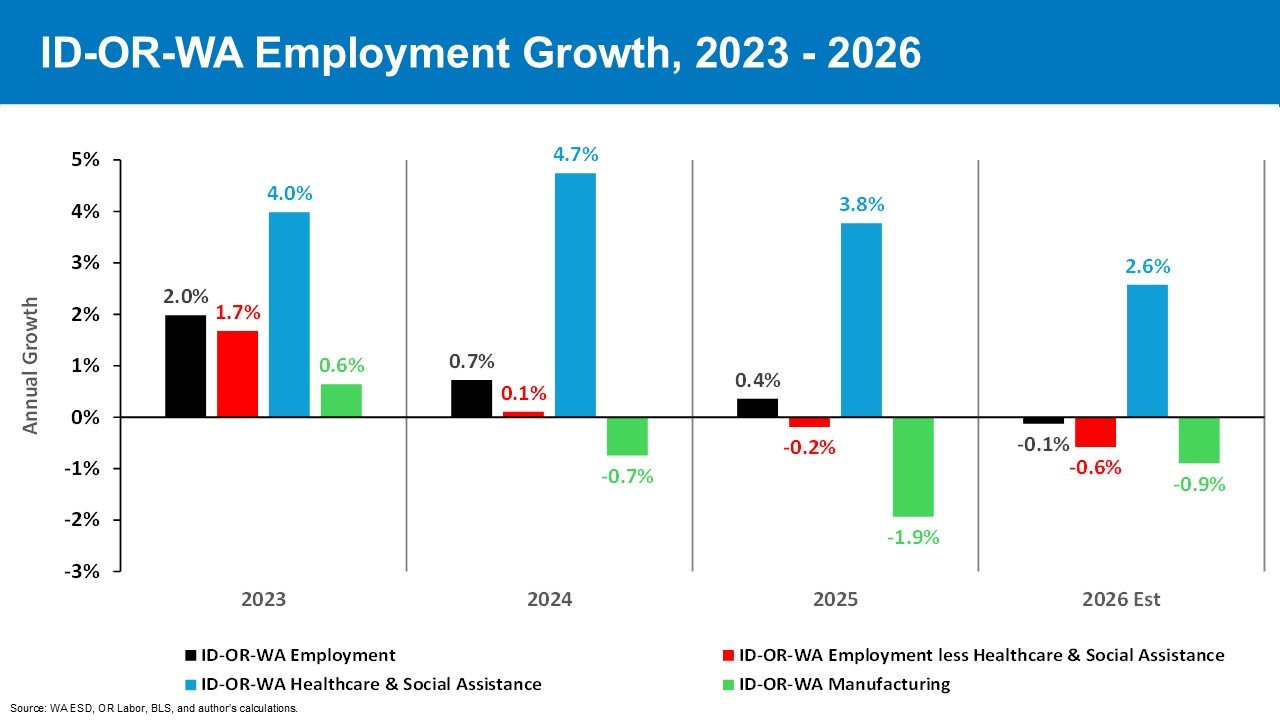
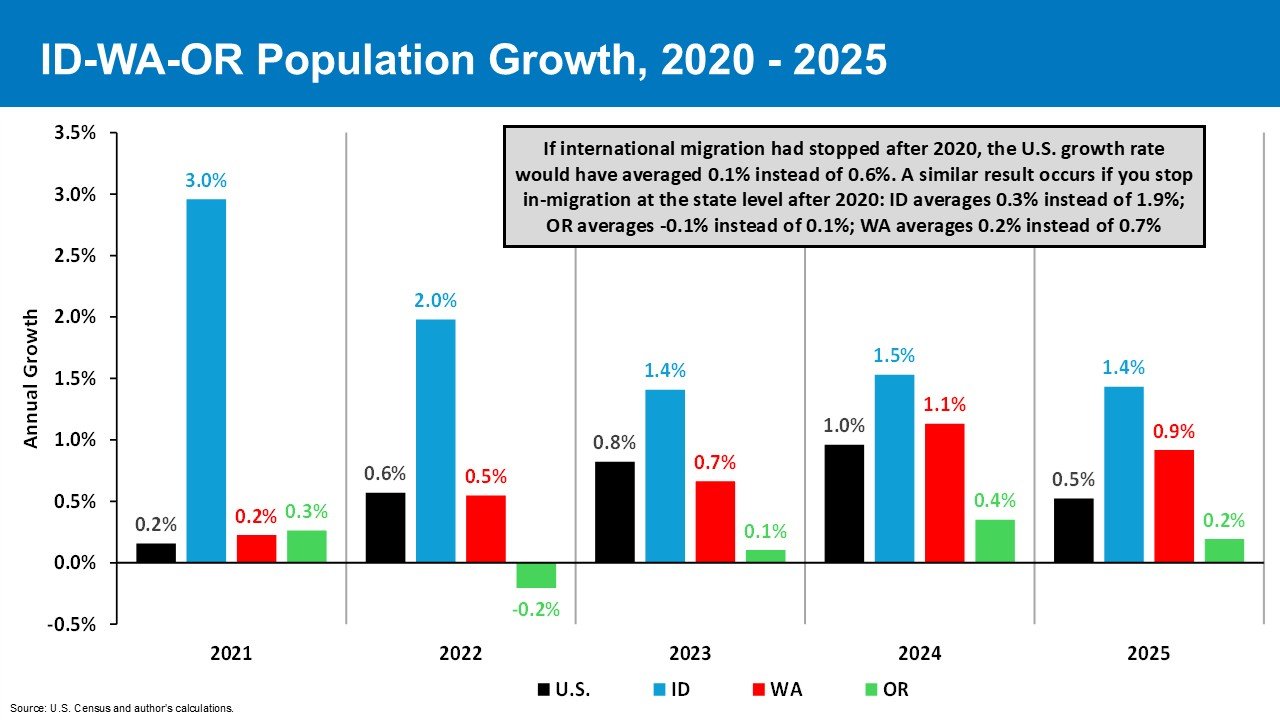
Forsyth showed two slides depicting trends in employment and population growth in Oregon, Washington, and Idaho over the past four years, while noting that healthcare and social assistance jobs have been the major source of employment growth in those three states.
Matlock said PNGC Power consists of 24 members that serve almost 400,000 homes in the Northwest, making it one of Bonneville Power Administration’s largest customers (read presentation | watch video).
She said PNGC members will continue to rely on Bonneville’s Tier 1 power and its transmission system, but they have been grappling with questions of how to address load growth above the Tier 1 allocation, as well as decisions about capacity and resource adequacy.
This factors into PNGC’s portfolio strategy, which seeks to build off the base of the federal power system. The strategy then aims to leverage PNGC’s ability to scale and make the next megawatt as reliable & affordable as possible, while increasing local control & rate stability for members.
Matlock spelled out a series of projects PNGC has planned in the coming years to implement this strategy, including:
- Constructing a 40 MW solar and 10 MW storage project in central Oregon by July 2027, with commercial operation targeted for fall 2028
- Ponderosa solar in central Oregon - a 190 MW, 20-year power purchase agreement, with commercial operation targeted in 2028
- Securing bridge power between 2029-2032, with the first market transaction expected late in 2026
- Constructing the White Pine combined-cycle natural gas plant in northern Idaho. This 600 MW facility is expected to be online by 2032-33, and will be designed to accommodate up to a 50% blend of hydrogen fuel.
“We can build our own generation and have stable rates,” Matlock said.
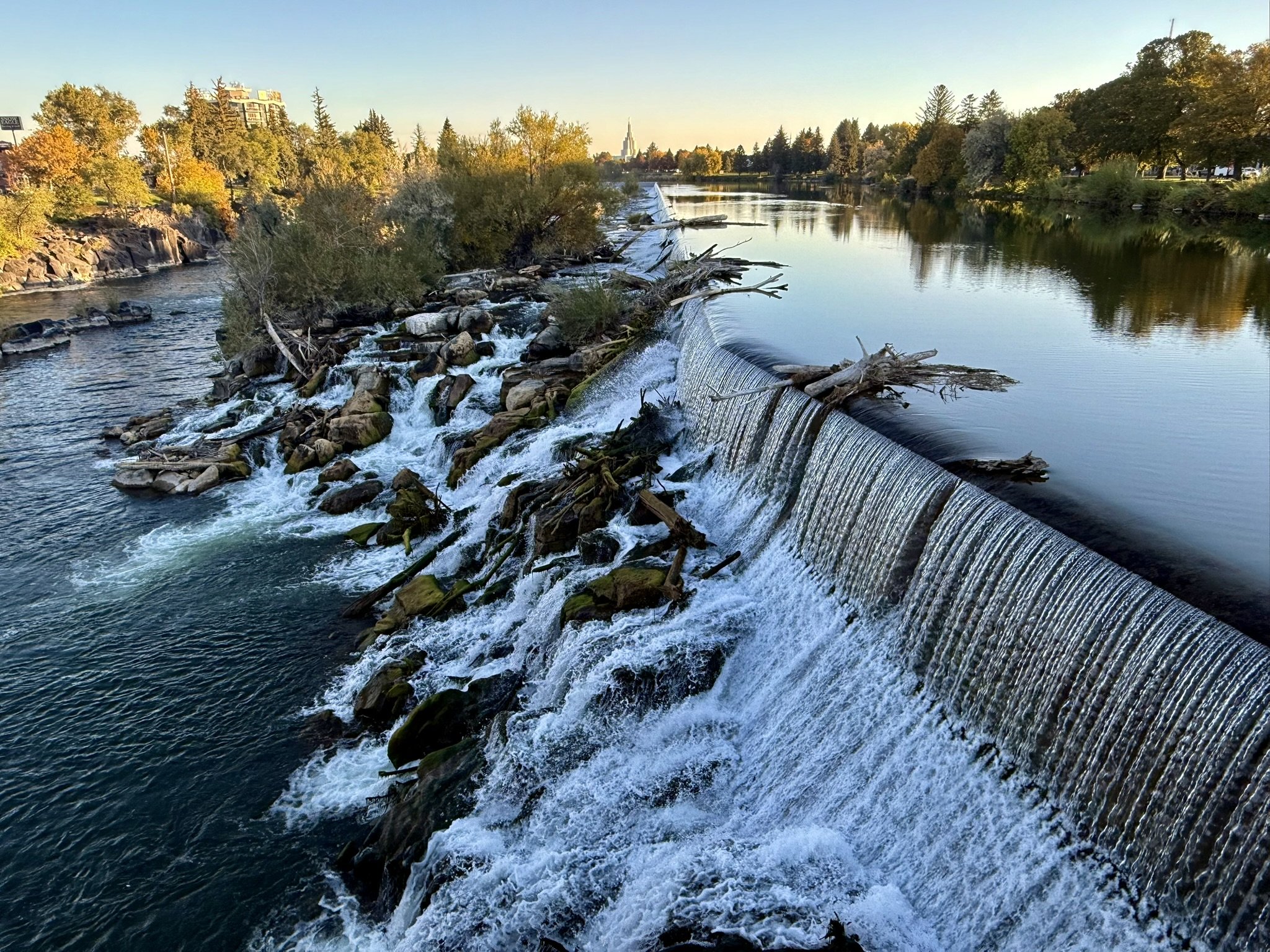
Idaho Power expands transmission lines, adds generating resources
Idaho Power’s service territory in southern Idaho has seen major economic and population growth in recent years, driven by an influx of new residents, the A.I. buildout, and job growth.
These trends are reflected in Idaho Power’s most recent integrated resource plan from 2025, Ellsworth explained (read presentation | watch video). The utility forecasts 8.3% annual growth in retail power sales over the next five years, and 5.1% annual growth in peak demand. While the A.I. trade is not the sole factor in driving this need for energy, Idaho Power’s growing customer base includes Micron Technology’s expansion of its chip fabrication facilities in Boise, and a new Meta data center in Kuna.
By 2035, Idaho Power’s IRP calls for a coal-to-gas plant conversion, new natural gas generation, solar plants, battery storage, energy conservation, and demand response. For large loads, Idaho Power’s interconnection process stipulates that “growth pays for growth,” and rate structures won’t allow cost shifting to other customers.
Over the next five years, the utility is also developing or co-developing a trio of transmission line projects that will connect the Northwest with Nevada and the Desert Southwest. That includes:
- Boardman-to-Hemingway, a 300-mile-long, 500-kilovolt transmission that will run from Boardman, Ore., to the Boise area. The line is currently under construction.
- Gateway West phases 1 & 2, which would run between Boise and Twin Falls. These would be part of a larger transmission line project and running between Idaho and eastern Wyoming.
- Southwest Intertie Project North, a 285-mile-long, 500 kV line between Ely, Nevada, and Twin Falls. The project broke ground this fall, and aims for commercial operation by 2028-29.
Ellsworth said that Idaho Power is centrally located in the Western Interconnection, so these transmission line projects will help facilitate interregional energy transfers, and ease power flows into or out of the Northwest during peak demand periods, such as a heatwave or a winter storm.
Legal Disclaimer:
EIN Presswire provides this news content "as is" without warranty of any kind. We do not accept any responsibility or liability for the accuracy, content, images, videos, licenses, completeness, legality, or reliability of the information contained in this article. If you have any complaints or copyright issues related to this article, kindly contact the author above.
